


 Dogs are not dining chairs or television sets. They’re more than that to their humans. The Ohio Sixth District Court of Appeals just took a step toward recognizing that fact officially when it decided damages for an injured pet need to be more than the simple “fair market value” of the animal.
The Court of Appeals sent a case back to the Toledo Municipal Court in October 2016 to reconsider the amount awarded to a woman whose puppy was seriously injured by another dog.
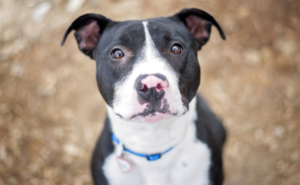
That puppy was Kingston, a black and white pit bull who lives with Jamie Rego and her family in Toledo. In 2014, when he was a mere 5 months old, Kingston’s own father, Nino, attacked him in his backyard. The incident left poor Kingston with three broken legs and a number of bite wounds.
Veterinarians told Rego that Kingston could be saved and have a good quality of life. The cost to do that, though, was a whopping $10,731. That would pay for emergency care, orthopedic surgery, a hospital stay and more. Despite the staggering expense, Rego just couldn’t put him down.
“I can’t put a value on him,” Rego told the Toledo Blade about her beloved Kingston. “He’s not an object, he’s a living animal.”
Rego hoped insurance coverage carried by Nino’s owner would cover her veterinary expenses, but that didn’t happen. Her claim for $15,000 for current and future veterinary bills was denied. The claim then became a lawsuit.
The Toledo Municipal Court’s original decision awarded Rego a paltry $400. Because pets are considered personal property in Ohio, the court deemed that amount to be Kingston’s “fair market value.” Typically, in cases involving damaged personal property you get either the cost of repairs or the fair market value of your property, whichever is less.
Rego appealed the award. The Ohio Sixth District Court of Appeals decided that “substantial justice was not done” for Rego. It held that “pets do not have the same characteristics as other forms of personal property, such as a table or sofa which is disposable and replaceable at our convenience.”
The court felt the owner was entitled to more – reimbursement of her veterinary bills, in particular. The court said:
[W]e cannot ignore the growing number of courts outside of Ohio which have awarded veterinary expenses for injuries caused by attacks from other dogs and grooming or kennel injuries. Further, some states have enacted statutes allowing recovery for economic damages such as veterinary expenses for injured pets. In addition, various courts and law review articles have discussed the plausibility of reclassifying companion animals under a ‘semi-property’ classification suggesting such terms as companion property, or sentient property.
The court held that additional factors should be considered in fashioning an appropriate economic damages award due to loss or injury. Those factors “include fair market value, age of the pet, pedigree, training, breeding income, recommendation of the treating veterinarian, circumstances of the injury, and anticipated recovery,” said the court.
Whatever the final outcome, Rego is glad Kingston is still with her.
“I did the right thing by saving him,” Rego told The Toledo Blade. “We love him. He’s part of the family. I just want his medical bills paid.”
The good news is that it’s becoming more and more common for courts to award the costs of veterinary bills in addition to the “value” of the injured pet. Unfortunately, the bad news is that Rego’s attorney doesn’t believe there’s a looming sea change coming that will award damages for emotional distress when pets are injured.
Courts typically don’t consider the emotional fallout from the loss of a pet to be a compensable form of damages. At most, a human’s affection for an animal might be considered when determining whether it was reasonable to decide to seek veterinary treatment.
A roughly similar result to Ohio’s occurred in Georgia earlier in 2016. In that case, the plaintiffs sought to recover $67,000 in veterinary bills spent trying to save the life of their dachshund. A boarding facility gave her the wrong medication and it damaged her kidneys. Ultimately she died.
The court in that case determined that while the plaintiffs couldn’t recover for sentimental value, an owner can seek interest and expenses incurred trying to cure an animal who was negligently injured.
The mere fact that courts are recognizing that pets aren’t the same thing as other personal property is an important first step in the right direction. Slowly, surely, the judicial world must recognize that animals are not just “things we own” like a car or an iPod. They have an intrinsic value vastly greater than a sofa or a bicycle. They are beings who are important to us. We are emotionally devastated when they are injured or killed.
May allowing recovery of veterinary care costs be the start of a bigger change. The legal world needs to recognize that companion animals should be categorized as more than mere items of personal property. We need updated laws that reflect this truth.
Photo credit: Thinkstock
Article By: Susan Bird | December 19, 2016
Full Article at care2.com




Leave A Comment